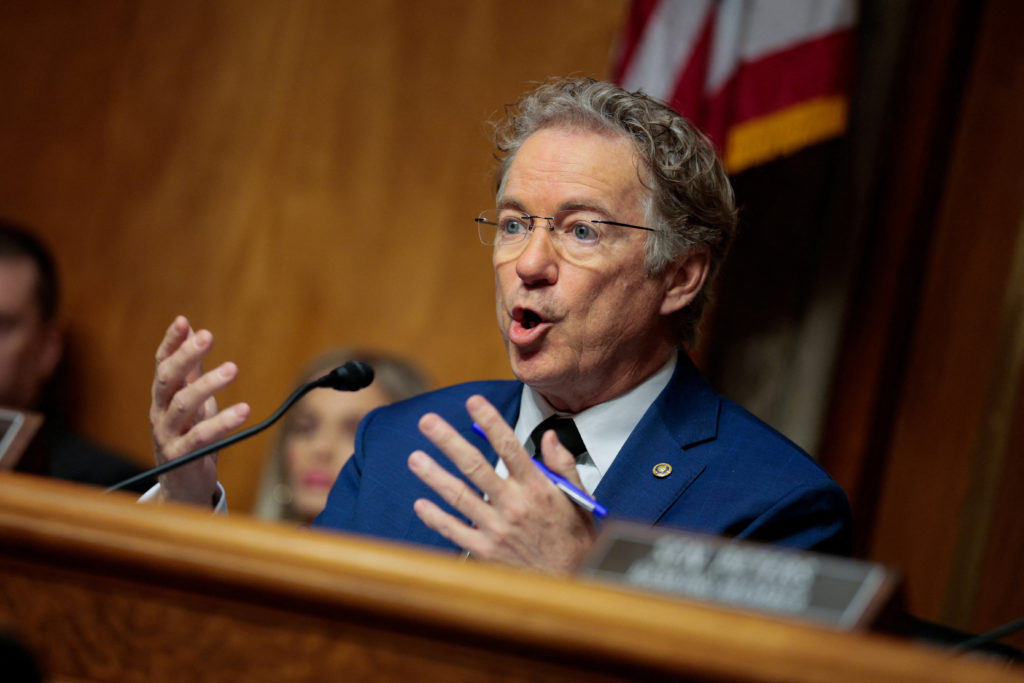
Senator Mullin's Near-Brawl With Teamsters Boss Shocks Senate
The hallowed halls of the United States Senate, typically reserved for nuanced debate and legislative discourse, recently witnessed an astonishing display of raw confrontation. In an incident that sent shockwaves across Capitol Hill and beyond, Senator Markwayne Mullin (R-OK) came perilously close to a physical altercation with Teamsters President Sean O’Brien during a Senate committee hearing. This dramatic exchange not only dominated headlines but also illuminated the intensifying pressures and volatile dynamics within contemporary American politics, casting a spotlight on the often-thin line between passionate advocacy and personal animosity, particularly in a high-stakes
senator mullin hearing.
The near-brawl, which unfolded during a Health, Education, Labor and Pensions Committee hearing, left many questioning the state of decorum in Congress. It wasn't merely an isolated outburst but appeared to be the culmination of simmering tensions and a broader pattern of Senator Mullin's unapologetically direct approach to political engagement, a style that has increasingly defined his presence in the Senate.
The Escalation: From Twitter Feud to Capitol Hill Confrontation
The fuse for this explosive encounter was lit not in the committee room, but on social media. Teamsters President Sean O’Brien had previously published a tweet challenging Senator Mullin, stating he could take the senator "any time" or "any place." While such online bravado often remains in the digital ether, Mullin evidently took the challenge personally and decided to address it directly during the public
senator mullin hearing.
During the committee proceedings, Mullin, rather than focusing solely on the policy matters at hand, pointedly read O'Brien's tweet aloud, setting the stage for the dramatic face-off. "Sir, this is a time, this is a place," Mullin declared, his voice rising. "You want to run your mouth, we can be two consenting adults and we can finish it here." O'Brien, equally defiant, responded, "OK, that's fine, perfect." The exchange quickly spiraled, with Mullin challenging, "You want to do it now?" to which O'Brien retorted, "I would love to do it right now." The Oklahoma Senator then commanded, "Well, stand your butt up then," prompting a visible tension that threatened to erupt into actual violence.
It was only the swift and firm intervention of Senator Bernie Sanders (I-VT), the committee chairman, that prevented the situation from escalating into a physical brawl. Sanders repeatedly hammered his gavel, demanding order and reminding both men of the appropriate conduct expected within a Senate committee. The incident served as a stark reminder of how quickly political disagreements can devolve when personal insults and perceived slights take precedence over parliamentary procedure. This was a moment of profound concern for those who value the sanctity and professionalism of congressional proceedings.
A Pattern of Passionate Outbursts: Connecting the Dots
While the confrontation with O'Brien was undeniably sensational, it wasn't Senator Mullin's first recent display of fiery passion in a Senate hearing. Just weeks prior, Mullin had gained significant attention for a separate, equally impassioned tirade during an Armed Services Committee hearing. In that instance, he lambasted his colleagues for what he perceived as blatant hypocrisy in their questioning of Defense Secretary nominee Pete Hegseth. For more insights into that particular showdown, you can read
Mullin Exposes Hypocrisy in Hegseth Hearing: A Senate Showdown.
Mullin argued that many senators were holding Hegseth to standards they themselves failed to meet, particularly regarding qualifications and personal struggles. He challenged their criticisms of Hegseth's experience to lead the Pentagon, stating, "I think it’s so hypocritical of senators, especially on the other side of the aisle, to be talking about his qualifications to not be able to lead... and yet, your qualifications aren’t any better."
He further underscored his point by highlighting perceived double standards. Mullin noted that the legal qualification for Secretary of Defense is simply being a civilian, with specific waivers possible for retired military personnel – a waiver Congress granted for Secretary Austin, a nominee supported by many who now questioned Hegseth. Mullin then turned to personal conduct, referencing questions about Hegseth’s past marital issues. He directly challenged his colleagues: "How many senators have showed up drunk to vote at night? ... And then how many senators do you know have gotten a divorce before cheating on their wives? Did you ask them to step down?" These cutting remarks, delivered with characteristic bluntness, aimed to expose what Mullin saw as performative outrage rather than genuine concern.
These two distinct incidents – the near-brawl and the Hegseth defense – paint a picture of a senator unafraid to challenge norms and confront perceived injustices directly, whether they involve a labor leader or his own congressional peers. For a broader look at Senator Mullin's impactful presence, consider exploring
Markwayne Mullin's Fiery Senate Moments: From Rant to Confrontation.
The Broader Implications for Senate Decorum and Public Trust
The spectacle of a
senator mullin hearing almost devolving into a street fight raises serious questions about the state of political discourse and the future of congressional decorum. In an era of heightened political polarization and increasing public cynicism towards institutions, such incidents risk further eroding trust in government. When lawmakers engage in personal feuds rather than focusing on substantive policy debates, it can reinforce the public perception that politics is more about performance and personality clashes than actual governance.
Moreover, the role of social media in escalating these conflicts cannot be overstated. Online platforms provide an arena for challenges and insults that can easily spill over into real-world confrontations, blurring the lines between private grievances and public responsibilities. While passionate debate is a cornerstone of democracy, there's a critical difference between robust disagreement on policy and personal attacks that undermine the civility necessary for effective collaboration.
Navigating Congressional Confrontations: What It Means for Governance
The Mullin-O'Brien incident offers several takeaways about navigating congressional confrontations and maintaining order.
- The Chairman's Crucial Role: Senator Sanders' intervention was a textbook example of a committee chair asserting authority to maintain order. Without such decisive action, the situation could have spiraled beyond control, setting a dangerous precedent.
- Balancing Passion and Professionalism: While senators are elected to advocate fiercely for their constituents and beliefs, there is an expectation of professionalism. Crossing the line into personal threats, even when provoked, can detract from a lawmaker's credibility and the seriousness of the legislative process.
- Understanding the "Theater" of Politics: Some argue that such outbursts are a calculated form of political theater, designed to energize a base or garner attention. While this may be a strategic consideration, the long-term cost to institutional integrity can be significant. It risks normalizing aggressive behavior over reasoned debate.
- De-escalation Strategies: For future instances, identifying and implementing de-escalation tactics, both by committee leadership and by the individuals involved, is vital. This could involve recessing a meeting, issuing formal warnings, or even establishing clearer guidelines for addressing out-of-order conduct.
The challenge for Congress is to find a way to allow for fervent advocacy without descending into personal attacks and physical threats. Upholding the dignity of the institution is paramount for its continued effectiveness and public trust.
The near-brawl involving Senator Markwayne Mullin and Teamsters President Sean O’Brien during a Senate hearing was a startling moment that highlighted the volatile nature of contemporary politics. Coupled with Mullin's earlier criticisms of congressional hypocrisy, these events paint a vivid picture of a senator unafraid to challenge the status quo, even if it means confronting individuals directly or disrupting traditional decorum. While such displays undoubtedly capture public attention, they also underscore the urgent need for a renewed commitment to civility and respect within the legislative process, ensuring that the critical work of governance can proceed without constant threat of personal animosity overshadowing substantive debate.