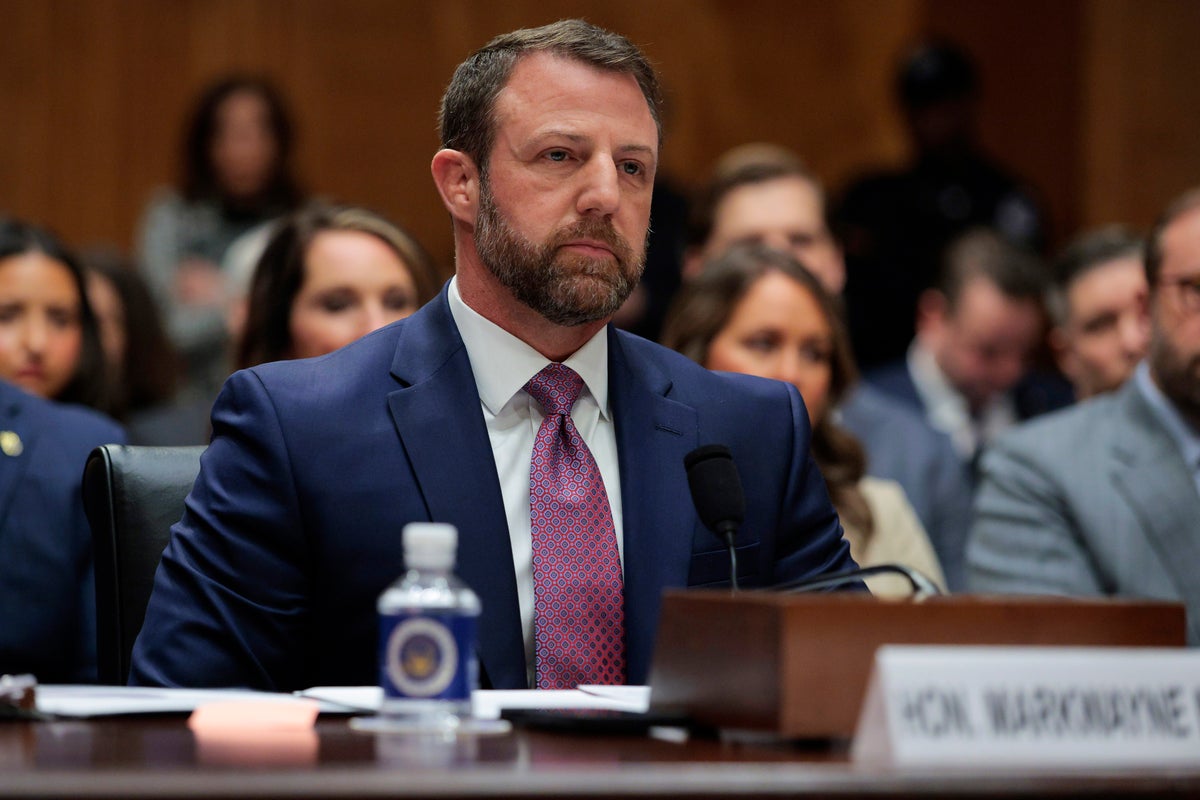
Mullin Exposes Hypocrisy in Hegseth Hearing: A Senate Showdown
In a Senate Armed Services Committee hearing that quickly transcended standard political discourse, Senator Markwayne Mullin (R-OK) unleashed a blistering critique, accusing his colleagues of rampant hypocrisy. The target of their collective scrutiny was Defense Secretary nominee Pete Hegseth, but Mullin deftly turned the spotlight back onto the very senators who sought to judge Hegseth's qualifications and past conduct. This dramatic senator mullin hearing not only captivated onlookers but also ignited a broader conversation about political integrity, double standards, and the true nature of vetting processes in Washington.
The Core of the Accusation: Hypocrisy on Qualifications
The initial phase of the hearing saw senators raising pointed questions about Pete Hegseth's suitability to lead the Pentagon. Many questioned his experience, or perceived lack thereof, for such a critical role. However, Senator Mullin swiftly and fiercely challenged this line of questioning, labeling it "so hypocritical."
Mullin argued that many of the senators on the committee, particularly those across the aisle, were no more qualified for their own positions than Hegseth was to be Secretary of Defense. "You guys aren't any more qualified to be a senator than I'm qualified to be the senator, except we're lucky enough to be here," Mullin asserted, effectively leveling the playing field and stripping away the perceived moral high ground of his colleagues.
To underscore his point, Mullin then read aloud the general qualifications for the U.S. Secretary of Defense: primarily, the position is to be filled by a civilian. He further elaborated that if a nominee has served in the U.S. armed forces, they must have been retired for at least seven years, a requirement that Congress can waive. This seemingly simple explanation was a direct hit at the perceived double standards. Mullin highlighted that current Defense Secretary Lloyd Austin, a Democrat appointee, required a waiver because he had recently stepped off the board of Raytheon. "But I guess that's okay because that's a Democrat Secretary of Defense. But we so quickly forget about that," Mullin remarked, drawing a sharp contrast that suggested political affiliation, rather than consistent standards, dictated the leniency or severity of scrutiny.
This incident throws into stark relief the complexities of defining "qualification" in political appointments. Is it solely about a resume that perfectly aligns with the job description, or does it encompass a broader range of leadership skills, strategic thinking, and the ability to navigate complex political landscapes? Mullin's intervention suggests that often, the definition is fluid, shifting to fit partisan narratives rather than objective criteria.
Double Standards: From Professional Experience to Personal Conduct
Mullin's critique didn't stop at professional qualifications; he pivoted sharply to personal conduct, responding to questions raised by Senator Tim Kaine (D-VA) regarding Hegseth's past marital difficulties and hypothetical scenarios of showing up to work intoxicated.
In a moment that garnered laughter and stunned silence throughout the chamber, Mullin posed a series of provocative questions directly to his colleagues: "How many senators have showed up drunk to vote at night? Have any of you guys asked them to step down and resign from their job? And don't tell me you haven't seen it because I know you have." He continued, "And then how many senators do you know have gotten a divorce before cheating on their wives? Did you ask them to step down? No, but it's for show."
This unvarnished challenge brought the sanctity of the Senate floor into question, revealing a raw and often unspoken truth about the personal lives and perceived failings of elected officials. Mullin's argument was that personal mistakes, common to all, were being selectively weaponized for political gain against Hegseth, while similar or worse transgressions among their own ranks were ignored or excused. This isn't the first time Senator Mullin has engaged in a high-stakes confrontation. Readers might recall the near-brawl with Teamsters President Sean O’Brien, demonstrating his propensity for direct, unvarnished challenges that cut through political niceties.
The debate over personal morality in public office is perennial. While integrity and sound judgment are undeniably crucial for leaders, Mullin's outburst compels us to consider where the line between legitimate scrutiny and invasive, hypocritical character assassination truly lies. It highlights the tension between the public's expectation of flawless leaders and the reality that politicians are, like all humans, imperfect individuals.
The Performance of Politics: A Call for Self-Reflection
Senator Mullin explicitly called out the "show" of the hearing, arguing that the intense scrutiny of Hegseth was primarily for public consumption, a deliberate effort to "make a big show and point out the hypocrisy because a man's made a mistake." He concluded his fiery remarks with a powerful biblical analogy: "Give me a joke. It is so ridiculous that you guys hold yourself as this higher standard and you forget you got a big plank in your eye. We've all made mistakes. I've made mistakes."
He then turned to Hegseth's wife, Jennifer, present at the hearing, crediting her with standing by her husband through difficulties, implying a depth of character that arguably outweighs past personal errors.
Mullin's statement forces us to critically evaluate the nature of political hearings. Are they genuine mechanisms for vetting candidates and ensuring accountability, or have they devolved into theatrical performances designed to score political points, appease partisan bases, and discredit opponents? For citizens, discerning between substantive questioning and performative politics can be challenging. A useful tip is to look beyond the immediate headlines and consider:
- Consistency of Standards: Are similar questions and ethical considerations applied equally to all nominees, regardless of political affiliation?
- Relevance to Role: Do the questions directly pertain to the nominee's ability to perform the duties of the office, or do they delve into purely personal matters without clear professional implications?
- Evidence vs. Insinuation: Is the scrutiny based on verifiable facts and credible concerns, or on rumor, speculation, or past mistakes that have no bearing on current capability?
This senator mullin hearing provides a masterclass in how these dynamics play out.
Beyond the Headlines: What Mullin's Stance Reveals
Senator Mullin's explosive intervention is more than just a single incident; it's indicative of a broader pattern of his direct, unvarnished approach to politics. As documented in various reports, including Markwayne Mullin's Fiery Senate Moments: From Rant to Confrontation, he has consistently demonstrated a willingness to challenge established norms and call out what he perceives as hypocrisy, even when it means taking flak himself.
His willingness to disrupt the polite, often scripted, decorum of Senate proceedings offers a rare glimpse into the frustrations that can fester beneath the surface of bipartisan agreement. While some might criticize his methods as uncouth or unparliamentary, others might view it as a refreshing, albeit confrontational, demand for authenticity and self-reflection in a political climate often perceived as disingenuous.
The impact of such outbursts is multifaceted. On one hand, it can erode public trust in institutions by exposing perceived double standards and infighting. On the other, it can also act as a vital, if uncomfortable, check on power, forcing those in authority to confront their own biases and conduct. Mullin's challenge serves as a powerful reminder that the political arena is not immune to the universal human tendency towards error, and that accountability, if it is to be genuine, must begin with self-awareness.
Conclusion
Senator Markwayne Mullin's extraordinary intervention during the Pete Hegseth confirmation hearing transcended a mere defense of a nominee. It evolved into a powerful, albeit confrontational, demand for integrity and self-reflection from the very body tasked with upholding such standards. By meticulously dissecting the hypocrisies surrounding qualifications and personal conduct, Mullin exposed a political culture where standards can be selectively applied, often to serve partisan ends. The dramatic senator mullin hearing serves as a poignant reminder that while the pursuit of accountability is essential in public service, it must be pursued with a consistent ethical compass, free from the allure of political showmanship and double standards. Ultimately, Mullin's challenge calls on all involved in the political process – from senators to citizens – to look beyond the spectacle and demand genuine, principled leadership rooted in an honest assessment of both others and themselves.